






 |
Specifications
|
|
Specifications
|
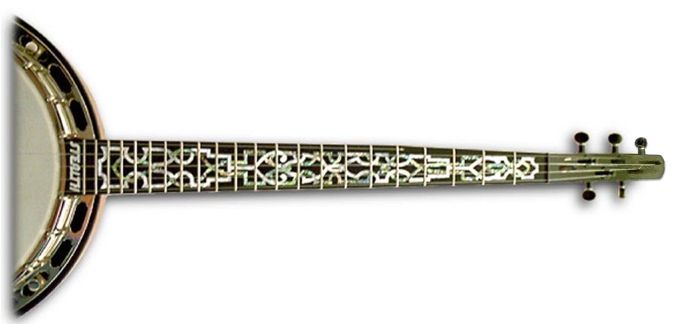
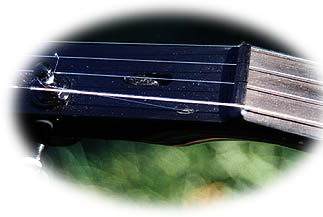
If you have seen Scott perform recently, you will surely have noticed the striking profile of the neck on his banjo. The 5th string goes into the neck at the 5th fret, travels through the neck in a small tube and emerges at the headstock where it is attached to its tuner like the other four strings. |
 |
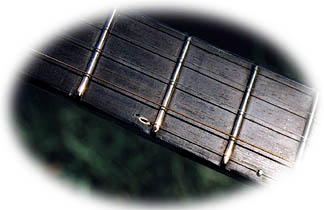 |
| Another
innovative design change is the shorter scale length (measured from the
nut to the bridge). Scott has found that this scale - the same as is
used on the guitar -both improves intonation and moves the bridge
closer to the center of the head, resulting in enhanced lower frequency
response. This shorter scale also makes those tough stretches a bit
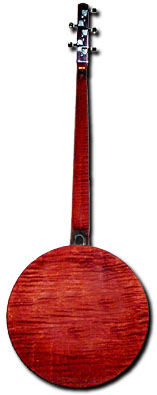
easier - especially if you have average to small size hands! The compound fingerboard radius - also common in the guitar world - is yet another reason why the Stealth banjo feels so much better under your fingers. Scott chose a radiused fingerboard for his banjo because it matches the natural curved shape of the fingers - making it faster and more comfortable for closed position fingerings. Using a compound radius allows you to have lower string action without buzzing and cleaner string bending up the neck. The overall design of the Stealth banjo - the neck position onto the pot, the neck angle, and the tall bridge - gives you the best of both worlds: low string action on the neck for ease of playing, and high action on the head for punch and volume. |
 |
Email us at: scott@scottvestal.com